

























Manchester City beat Sunderland 5-3 in an open Premier League match and remained perfect through five rounds. Sunderland’s Brian Brobbey scored twice in the first half and repeatedly challenged the leaders, but City found a third lead before the interval and added the goals needed to protect it. The result moved City three points clear at the top while also exposing defensive situations that a winning score should not hide.
Sunderland refused to accept the first setback
City scored first but did not gain control of the scoreboard for long. Brobbey’s movement gave Sunderland a direct route behind the home pressure.
His two first-half goals forced City to rebuild their lead more than once. The visitors showed courage without finding a stable way to slow the other end of the match. Brobbey’s movement repeatedly tested the space behind City’s first line of pressure. Sunderland did not need long periods of possession to threaten because an early forward pass could release the striker before the defence had reset. City therefore had to protect central areas while continuing to attack. The visitors’ willingness to run forward after each setback explains why the score remained close throughout a remarkable first half.
City kept creating after each equaliser
Repeated setbacks can make a team force the next attack. City instead continued to use width and late movement around the penalty area.
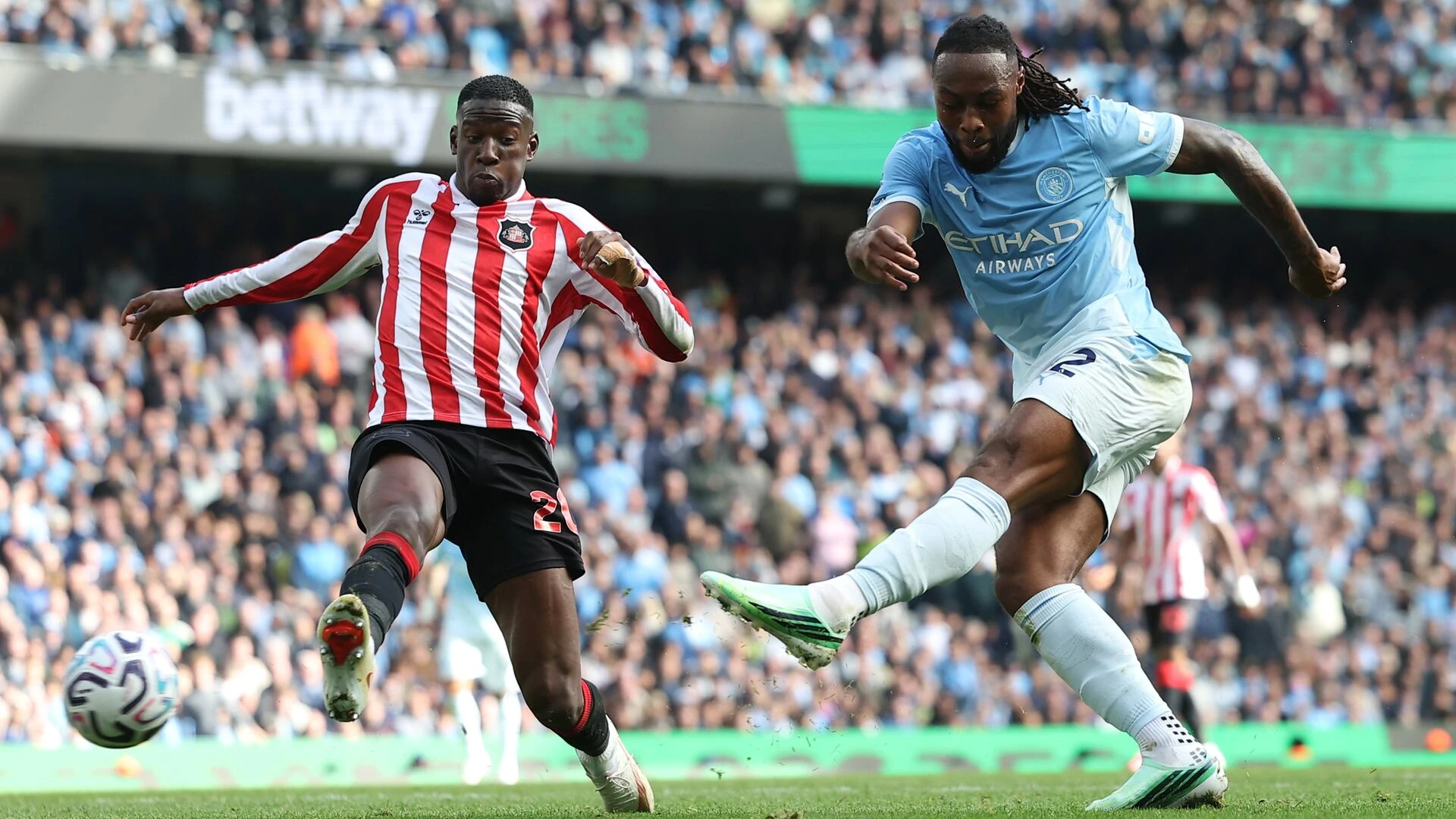
Marc Guéhi kept the third scoring move alive before Antoine Semenyo finished the loose ball. The response showed attacking depth even while the defensive balance remained imperfect. City’s response relied on width and runners arriving after the first pass. Guéhi kept the ball alive at the back post before it ran to Semenyo, who finished the loose ball. The sequence was effective because several players occupied different heights around the box. City did not simply send more bodies forward; the team gave the ball carrier several useful choices.
Eight goals did not mean eight identical mistakes
Some chances came from quick combinations, while others followed incomplete clearances. Separating those causes matters more than treating the match as simple chaos.
City can preserve the attacking patterns and still correct the space left after losing possession. Sunderland can value its finishing while reviewing why the game stayed too open. The eight goals came from different problems and should not be reduced to one description of poor defending. Some attacks used space behind an advanced line, while others continued after a loose clearance or a deflection. City need to review the moments when their protection behind the attack was too thin. Sunderland can keep the direct running that created danger, but must improve its spacing after losing the ball.
The leaders managed the final phase
A two-goal margin offered more room but did not remove Sunderland’s threat. City had to keep the ball away from dangerous transitions and avoid unnecessary fouls.
The closing period tested concentration after a demanding first half. Seeing out the win was part of the performance rather than an automatic consequence of the fifth goal. A two-goal advantage late in the match still required calm possession and disciplined challenges. Sunderland had already shown that one quick attack could change the score, so City could not treat the fifth goal as the end of the contest. Short passes away from pressure reduced the number of transitions, while players behind the ball remained ready for another direct run. Managing those minutes completed the victory.
The table rewards results, not comfort
Five victories give City a three-point advantage at the top. The perfect record is valuable, but conceding three creates a clear training focus.
Sunderland leave without points despite showing that their attack can trouble the league leaders. Both teams can take useful evidence from a match that was more competitive than the final gap suggests. Five wins from five matches put City three points clear, but the perfect record does not remove the warning supplied by three conceded goals. Maresca can separate the attacking variety from the defensive gaps and work on both without dismissing the result. Sunderland leave without a point, yet Brobbey’s hat-trick and the number of chances show that their attack can trouble the league leaders. Both conclusions belong in the review. The next training review should separate the quality of City’s finishing from the moments that allowed Sunderland to attack an exposed back line. Preserving the first strength while correcting the second is more useful than treating an eight-goal match as either complete success or complete disorder.



Comments
No comments yet — be the first to share your thoughts.