


















Brighton defeat Aston Villa 4-0 after four first-half goals
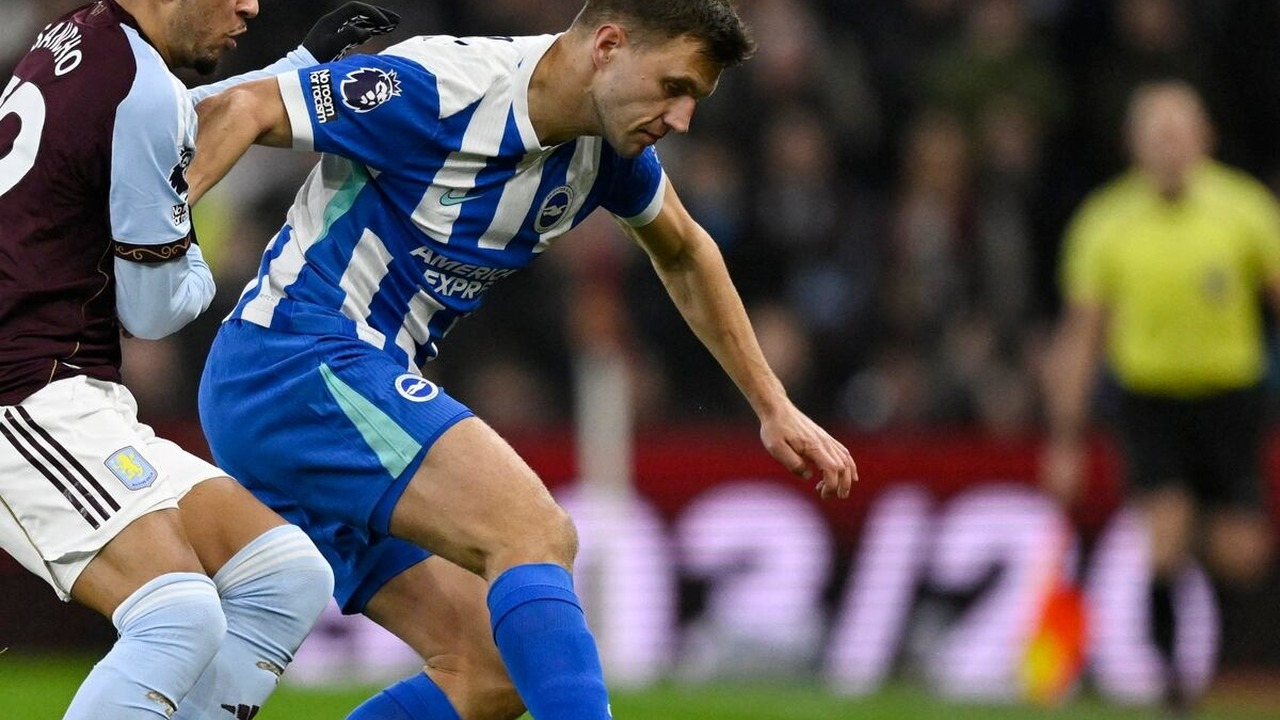
Brighton began their Premier League season with a 4-0 home victory over Aston Villa. All four goals arrived in the first half, where aggressive pressing and quick finishing removed any doubt about the result.
Maxim De Cuyper and Jack Hinshelwood each scored twice. Villa also lost Joao Gomes to a red card before the break, leaving the visitors with no realistic route back into the match.
Brighton’s pressing created the first clear chances
Aston Villa held the ball during the first minutes and tried to control the pace. Brighton then moved its pressure higher and began to challenge every pass near the visitors’ penalty area. The change forced Villa to make decisions before players were ready. A backward pass no longer created calm possession because Brighton followed it and closed the next receiver.
That work gave the home attackers shorter routes to goal. They did not need to build every chance from their own half. Several attacks began after a recovery in a dangerous area.
De Cuyper started the scoring burst
De Cuyper was involved in the first goal after eight minutes. His effort struck the post and then went into the net from defender Victor Lindelof. Ten minutes later, De Cuyper scored without help from a deflection. Brighton had now turned a balanced opening into a clear advantage, and Villa struggled to slow the next wave.
The Belgian’s movement caused problems because he did not remain in one fixed lane. He could support a wide attack and then arrive closer to goal before the defence had reset.
Hinshelwood scored twice in two minutes
Hinshelwood scored twice around the half-hour mark. His first goal increased the pressure, and the second arrived before Villa could recover from the restart. Yasin Ayari won the ball near the edge of the penalty area and gave Hinshelwood a simple route to the fourth goal. The action showed the value of Brighton’s press: one successful ball recovery created an immediate shot.
Villa’s task became even harder when Gomes was sent off. Brighton reached half-time with a four-goal lead and one more player on the field.

| Scorer | Goals | Match period |
|---|---|---|
| Maxim De Cuyper | 2 | First half |
| Jack Hinshelwood | 2 | First half |
Brighton protected the result after the break
The home team did not need to chase another open contest in the second half. Brighton kept a stable shape, moved the ball and avoided giving Villa a quick goal that might have changed the mood. Babis Kostoulas had a goal ruled out for offside, while Costinha struck the post. Those chances showed that Brighton could still create danger without losing control.
The final score gives Fabian Hurzeler a strong opening result. It also gives Villa a clear list to review: handling a high press, protecting the first pass after kick-off and staying organised when one mistake quickly follows another.
Brighton turned pressure into clear scoring chances
Brighton did not keep the ball only to control the clock. The home side moved it forward as soon as Aston Villa’s first line opened. De Cuyper and Hinshelwood then attacked from different starting positions, which made it difficult for the defenders to protect both the centre and the far side. The red card for Boubacar Kamara made Villa’s task harder, but Brighton had already established the pattern of the game.

The first goal rewarded sustained pressure, and the second arrived before Villa could rebuild its shape. Two more goals before half-time removed any realistic route back into the contest.
Brighton managed the second half with less risk. The team did not chase a fifth goal at the cost of its defensive balance. It prevented Aston Villa from scoring, shared the workload and avoided an easy counterattack that could have changed the mood inside the stadium.
Brighton did not concede after half-time
Brighton continued to defend with care after the break. The midfield stayed close to the back line, while the full-backs avoided moving forward at the same time. That structure stopped Aston Villa from using the open spaces that often appear when a team protects a large lead.



Comments
No comments yet — be the first to share your thoughts.