


















Edin Dzeko returns to the Bundesliga after 5,734 days and enters the age record list

Edin Dzeko returned to the Bundesliga as a second-half substitute in Schalke’s 3-0 defeat at Augsburg. His appearance came 5,734 days after his previous match in the competition. At 40 years and 166 days, he became the eighth-oldest player to appear in Germany’s top division.
The historic appearance came inside a difficult result
Schalke lost 3-0 at Augsburg, so the return should not be presented as a winning comeback. Dzeko entered in the 76th minute and played the closing part of a match that had already become difficult for the promoted side. The personal milestone and the team result can both be true without one being used to hide the other.
That context makes the event more precise. Dzeko did not score a consolation goal, and Schalke did not recover. His achievement was returning to the competition after more than 15 years and adding another Bundesliga appearance at an exceptional age. Augsburg’s victory remains the confirmed outcome of the match.
Only one player had a longer break between appearances
The gap of 5,734 days equals 15 years and 255 days. Bundesliga records place it second among the longest intervals between two appearances. Wolfgang Bohni remains ahead with a gap of 16 years and 245 days. Dzeko’s return therefore created a major record without being described as the absolute longest.
His earlier Bundesliga period ended with Wolfsburg in the 2010/11 season. The long interval included successful years in England, Italy and Turkey before his route returned to German football through Schalke. The record measures time between league appearances, not a period away from all professional football.
| Milestone | Confirmed figure |
|---|---|
| Gap between appearances | 5,734 days |
| Age on return | 40 years, 166 days |
| All-time age position | Eighth-oldest Bundesliga player |
| Match result | Augsburg 3-0 Schalke |
Dzeko also entered the list of the league’s oldest players
At 40 years and 166 days, Dzeko became the eighth-oldest player used in a Bundesliga match. He is the fourth-oldest outfield player on the list. Goalkeepers often extend careers differently, so separating outfield players gives useful context without changing the official overall position.
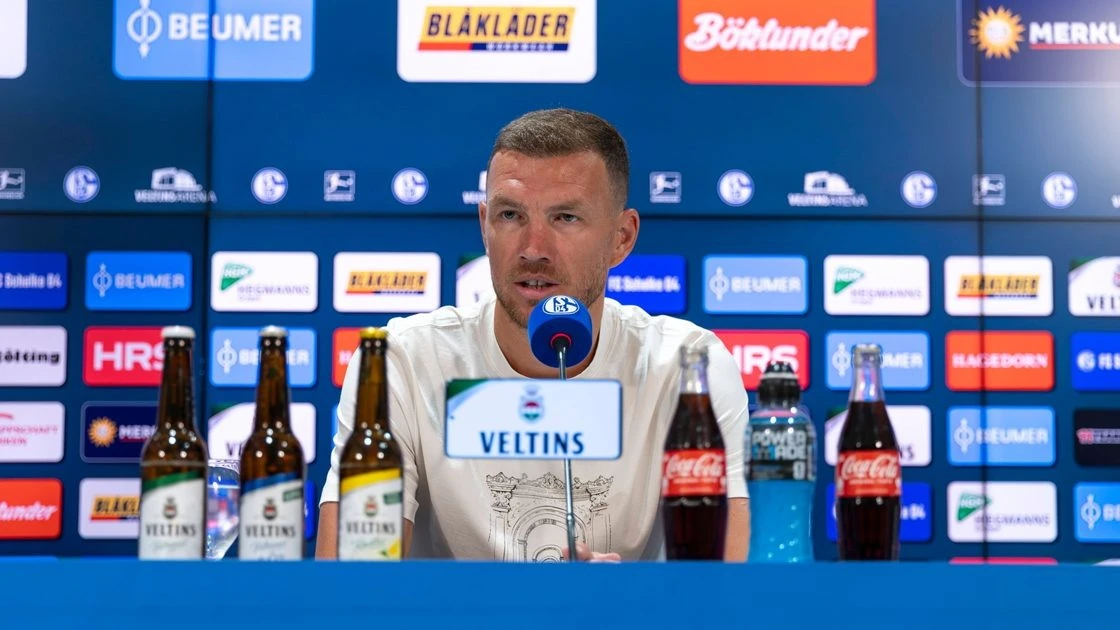
Age records describe durability, but they do not guarantee future selection. Schalke will still judge Dzeko through fitness, movement and how his experience supports the team. A veteran striker can help by holding the ball, guiding a younger forward and choosing efficient runs instead of trying to match the sprint volume of a player half his age.
A future goal could create another record
The official Bundesliga report notes that a goal in the next two months would make Dzeko the second-oldest scorer in league history behind Claudio Pizarro. A goal after that period could move him to first. This is a possible future landmark, not one he has already achieved.
The distinction matters because appearance and scoring records are separate. Dzeko has completed the appearance milestone. He has not yet completed the possible age record for a goal. Any later article should use the actual date and his age on the day of a confirmed goal rather than repeat the current projection.
Schalke need his experience during the current campaign
The club returned to the Bundesliga after three seasons away, and the opening defeat showed the size of the challenge. Dzeko can provide calm around difficult moments, but the team cannot place the whole survival task on one veteran forward. Defensive spacing, midfield control and support around the striker will decide whether his touches become useful attacks.
His cameo at Augsburg was short and cannot settle the question of his season role. He may start some matches, enter others late or help manage specific phases. The useful measure is whether Schalke create better possession and clearer chances when he plays, not simply whether his name creates attention.
The return is confirmed, while another record remains possible
Dzeko has played in the Bundesliga again. The exact return came after 5,734 days, at 40 years and 166 days, during a 3-0 defeat to Augsburg. Those facts are final. They do not require a prediction or another score to make the event important.
The next chapter remains open. A goal could move him further into the record book, while Schalke need points more urgently than personal milestones. The clearest account respects both sides: a historic individual return took place on a disappointing afternoon for the team.


Comments
No comments yet — be the first to share your thoughts.