


















Elversberg survive Leverkusen’s late charge and win their Bundesliga debut

The newcomers scored twice inside nine minutes, added a third after the break and held on for a historic 3-2 victory.
Two goals removed the fear of a first appearance
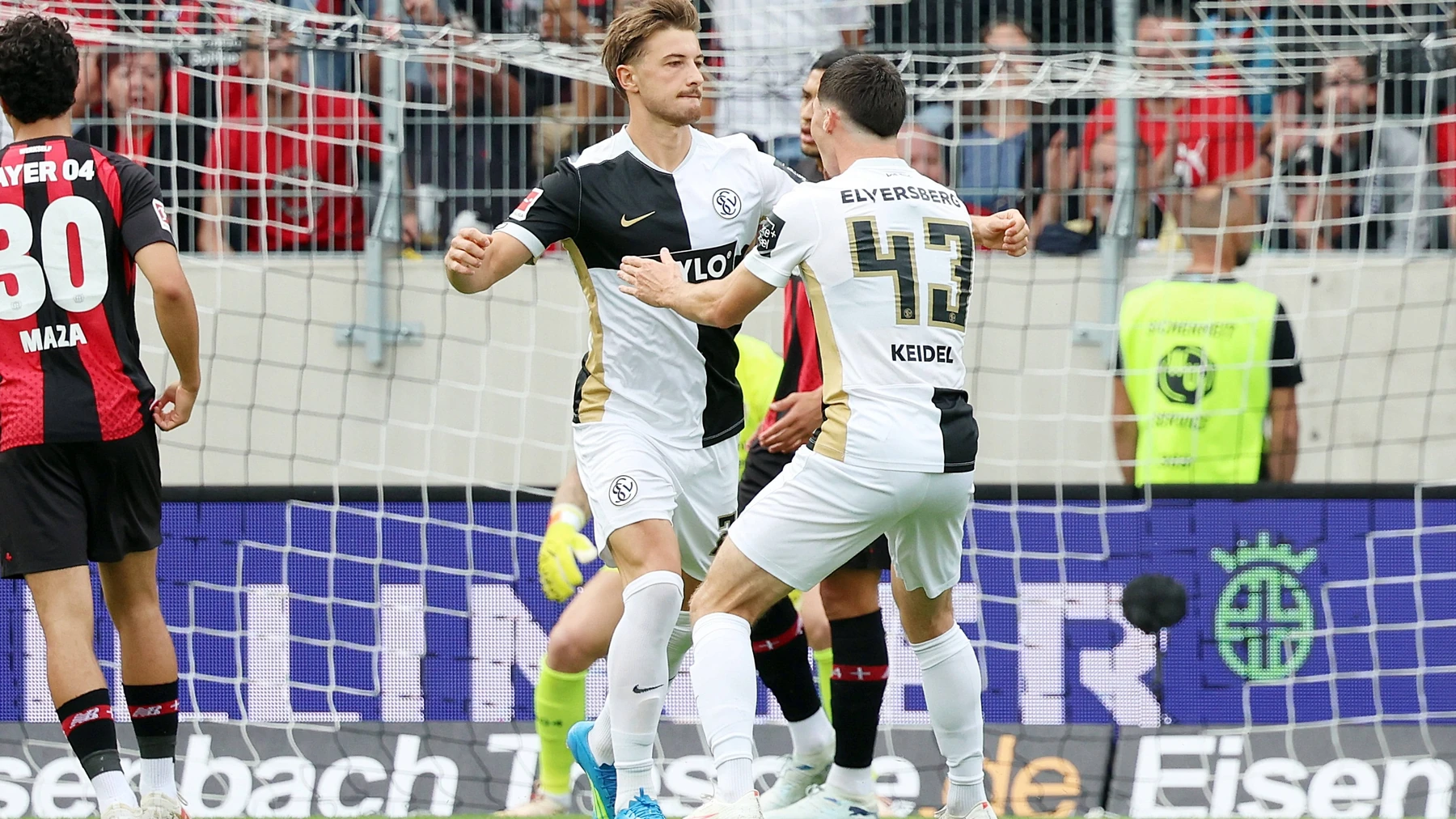
Elversberg entered the top flight for the first time and scored before the eighth minute had finished. Lukas Petkov converted the opening chance, then Cole Campbell made it 2-0 one minute later. The speed of the start prevented the newcomers from spending the match waiting for Leverkusen’s pressure.
The two goals also set a Bundesliga record for the fastest first two goals by a debuting club. Elversberg had seven top-flight debutants in the starting team. Their lack of experience did not produce a cautious opening. It produced direct passing and quick finishing.
Petkov influenced more than the score
Petkov scored the first goal and later supplied the pass for the third. His movement gave Elversberg a route through pressure and a target when the team recovered possession. He did not stay fixed in one area, which made it harder for Leverkusen to stop the next transition.
Support around him was equally important. Campbell finished the second attack, while the midfield protected the space left by forward runs. Elversberg’s lead came from a connected plan rather than two isolated shots.
| Goal | Scorer | Minute |
|---|---|---|
| 1-0 | Lukas Petkov | 8 |
| 2-0 | Cole Campbell | 9 |
| 3-0 | David Mokwa | 46 |
| 3-1 | Patrik Schick | 77 |
| 3-2 | Christian Kofane | 90+1 |
The third goal arrived immediately after half-time
David Mokwa scored 45 seconds into the second half from Petkov’s low cross. The goal expanded the lead to 3-0 before Leverkusen could establish a new rhythm. It also meant that the visitors needed three goals simply to draw.
Elversberg had produced only 1.35 expected goals by the end, but converted three chances. That efficiency was central to the result. It should not be confused with total control, because Leverkusen still created enough pressure to make the last part of the match difficult.
Leverkusen changed the direction of the finish
Patrik Schick reduced the deficit in the 77th minute. Christian Kofane then scored from a rebound in the first minute of added time after Victor Boniface headed against the bar. The score moved from 3-0 to 3-2, and the final minutes no longer felt secure for the home side.
Jonas Hofmann had another late effort, but goalkeeper Nicolas Kristof made the save. Elversberg’s task had changed from attacking space to defending the penalty area. The team completed that final task without conceding the equaliser.
The result carries a longer club story
Elversberg were playing in the fourth tier only five years earlier. Their first Bundesliga match therefore represented the final step of a rapid rise through the divisions. Beating an established Leverkusen side gave that rise a result that will remain part of the club’s history.
The victory does not guarantee an easy season. Leverkusen’s late comeback showed how quickly top-flight opponents can punish a drop in intensity. Elversberg can celebrate the three points while still using the final twenty minutes as a warning.
A historic score needs the full sequence
Elversberg won 3-2. They led 2-0 after nine minutes, moved 3-0 ahead just after the interval and conceded in the 77th and 91st minutes. The score did not come from a late winner or a penalty shootout. It came from an extraordinary start followed by a determined defence.
That order explains why the match matters. The newcomers showed courage first, efficiency next and resilience at the end. Leverkusen nearly erased the lead, but Kristof and the defence protected the final point of difference.
The Bundesliga’s official match report also named Petkov as Player of the Match. His goal and assist explain that choice, while Kristof’s late save protected the result. Both contributions belong to the same 3-2 debut victory.

Comments
No comments yet — be the first to share your thoughts.