





























































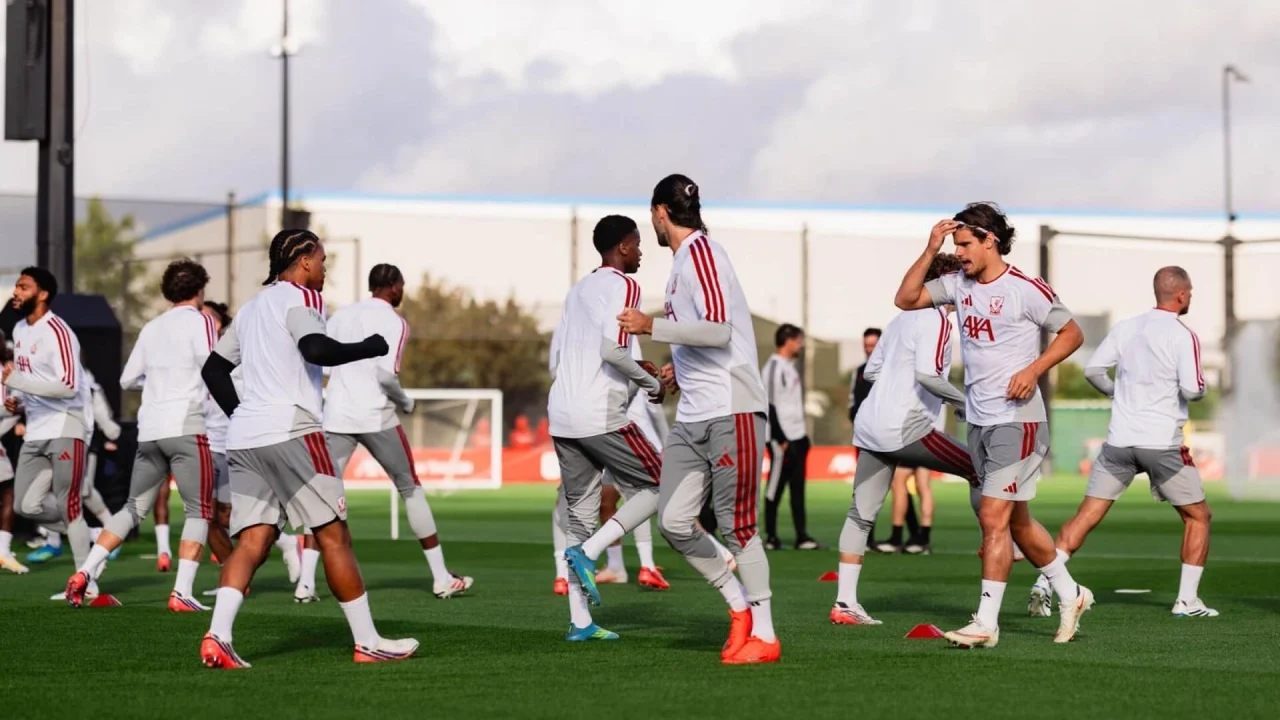
Liverpool’s latest injury update contains encouraging progress and important limits. Conor Bradley is working with the ball during individual rehabilitation, Federico Chiesa is moving closer to team training, and Giovanni Leoni may return after the international break. Hugo Ekitike needs more time to recover from an Achilles injury. None of these updates means a player is ready for a match, and Liverpool must complete the final stages without rushing anyone.
Ball work is progress, but Bradley is not ready to play
Bradley has been able to touch the ball during sessions while continuing work on his knee. That is a meaningful step because football-specific movement introduces decisions and coordination that gym work cannot reproduce. It does not mean he can immediately handle contact, repeated high-speed runs or the unpredictable direction changes of a match.
The medical and coaching staff will increase the workload in stages. Straight running may be followed by sharper turns, then team exercises without contact and finally full training. Supporters naturally focus on the first available fixture, but the better question is whether Bradley can complete each stage without pain or swelling. A stable week is more valuable than an early appearance followed by another absence.
Chiesa can offer another attacking option after full training
Chiesa is expected to move back toward group work. His ability to carry the ball and attack from a wide or inside position could give Liverpool a different route against a compact defence. Before that option becomes real, he needs rhythm with teammates. Pressing cues, overlapping runs and the timing of a final pass depend on shared sessions rather than individual fitness alone.
Chiesa may begin with a short appearance from the bench. That is not a judgment on his quality. Limited minutes allow the medical staff to assess his high-speed actions under match pressure. His playing time can then increase if he recovers well after each appearance.
| Player | Current recovery stage |
|---|---|
| Conor Bradley | Individual knee rehabilitation with ball work |
| Federico Chiesa | Expected to move toward team training |
| Giovanni Leoni | May join team training after the international break |
| Hugo Ekitike | Needs more time after an Achilles injury |
Leoni’s knee recovery must pass several stages
Leoni is recovering from an anterior cruciate ligament injury and could rejoin team training around the international break if progress continues. Recovery from an ACL injury does not advance at the same rate every week. Strength, confidence and football reactions have to return together, and the player must become comfortable responding to contact and unplanned movement.
Liverpool can help by separating the return to training from the return to competitive matches. A defender needs repeated work on body position, landing after aerial challenges and recovery runs before match intensity feels normal. An approximate period provides guidance, not a deadline that overrides the evidence from each session.
Ekitike’s Achilles recovery affects Liverpool’s attacking plans
Ekitike may be available near the final Champions League group matches or in January, depending on the response of his Achilles. Tendon recovery demands patience because discomfort can change running mechanics even when a player is eager to increase work. The staff must monitor not only speed but how force is produced and absorbed across repeated sessions.
Liverpool therefore need an attacking plan that does not assume an exact return date. Other forwards may share central duties, and midfielders can provide additional runs into the box. When Ekitike does return, he should join a functioning structure rather than carrying the expectation that one appearance will solve every attacking problem.
Each returning player will need a different workload
The squad currently has no listed suspension problem, which gives the coaches more control over selection. Even so, the number of names in training can exaggerate the number of players ready for a full match. One may be suitable for twenty minutes, another for a less intense fixture, and a third may need an additional week before contact.
A careful return can feel slow during a busy schedule, but it protects the rest of the season. Bradley, Chiesa, Leoni and Ekitike do not need identical rehabilitation plans. Liverpool’s best outcome is not the earliest possible return for all four players. It is having four reliable options who can perform repeatedly after they rejoin the squad.
Training load must match the next role
Return planning becomes more precise when the staff knows what the player will be asked to do. A full-back expected to cover repeated overlaps needs a different final test from a forward entering for a short central spell. Liverpool can reproduce those demands in training before exposing the player to the uncontrolled rhythm of competition.
The schedule also affects the first start. A match followed by several recovery days may be safer than one inside a rapid sequence, even if the opponent appears stronger. Selection should account for the days after the appearance, not only the minutes completed. The best return allows the player to continue training instead of causing another interruption.
Comments
No comments yet — be the first to share your thoughts.